04 · Unused SOPs

SOPs your team opens and follows without being told.

The SOPs are there, and your team still asks you.

We keep what works and rebuild the rest, so your SOPs are quicker than asking you.

What owners told us

  • “They become documents in the drive that nobody reads.”
  • “But each time they’re asking me what to do.”

What you want

The answer is in the process, and your team knows where to find it.

When a question comes up, your team finds the answer in the process faster than they could find you. Each process matches how the job is done today, so people trust it.

When someone does ask, you point them to the process. If the answer isn’t there yet, we add it, so the same question doesn’t come back.

What owners told us they want

  • “Just follow the map. Follow the trusted process that works.”
  • “We can always revert back to it versus just, well, we had this conversation six times already.”

What we find

  • Your SOPs sit in a shared drive folder nobody opens.
  • There’s a binder on a shelf, untouched since it was printed.
  • You wrote every line yourself, and none of it gets read.
  • You have a process for almost everything, spread across five places.
  • The documents are out of date, so the team asks you.
  • Your “document everything” project stopped at 90%.

What you’ve already tried

They stall because the document still isn’t quicker than asking you.

Template packs

They weren’t written for your jobs, and you still have to fill in every one.

ChatGPT or Claude drafts

They’ve never seen your team do the job, so they guess at the details that matter, and there’s no video or marked-up image to follow.

A one-off documentation project

Everything is written at once, from memory, and nobody tests it on a real job.

Screen-capture tools

They only record clicks, so the checks and any work away from a screen are left out.

Asking staff to write them

It’s on top of their own work, so the drafts arrive late or not at all.

Telling the team to use them

Reminders don’t make a slow, hard-to-find document quicker than asking you.

Why it happens

A checklist is one part of a process.

Most owners we work with thought their processes were documented too. The usual SOP is a list of steps written from memory by someone who already knows the job. It skips what the writer takes for granted, so the person following it still has to guess, and still asks.

A complete process is built from the real job being done. It has the video, the marked-up images, the written steps, why the job matters, the checks and the hand-off, so your team can follow it without coming back to you. Most people watch the video once, then work from the marked-up images.

Worth knowing

Why SOPs go unused

Teams skip SOPs for four reasons: they’re hard to find, slower than asking you, full of gaps, or nobody expects them to be used.

A process stored in a folder gets forgotten. It needs to sit inside the task it describes, so your team sees it when the job comes up.

Your team also copies you. If you still answer from memory, they’ll keep asking.

Why SOPs go unused
Hard to findSlower thanasking youNobody expectsthem to be usedFull of gapsYour teamasks you

Teams skip SOPs for these four reasons. Each one ends with your team asking you.

Why rewriting them yourself rarely works

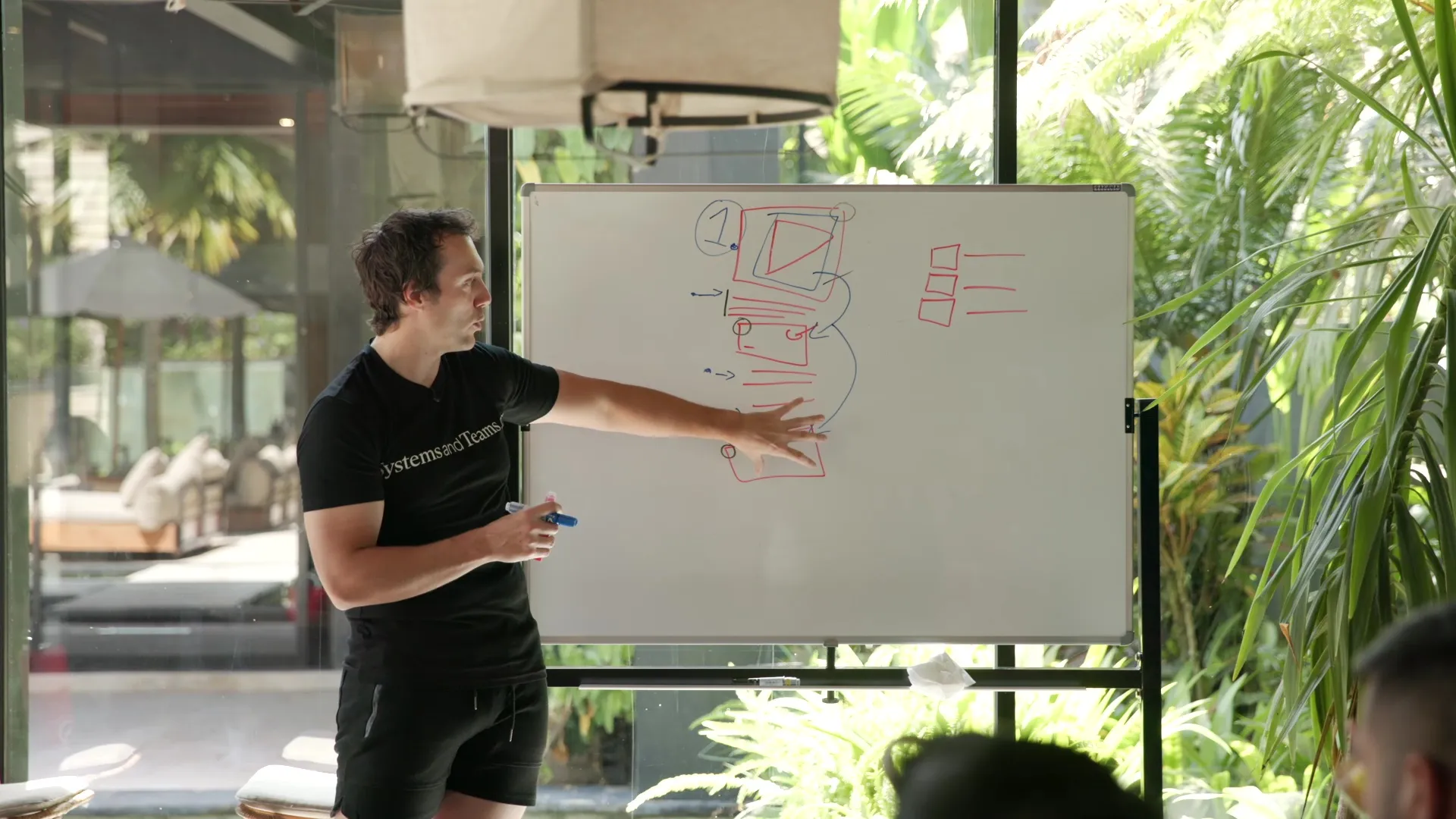
Jamie Stenhouse explaining how a process is laid out

Rewriting your own SOPs repeats the original mistake. You already know the job, so you can’t see the gaps.

A complete process is a substantial piece of work. The video, the steps and the images all have to agree, and it has to be tested on someone new.

Then getting it used is a separate job: storing it with the task, naming it so people find it, and turning every question into an update. Most attempts stop once the documents are written.

Our work is guaranteed. If a process isn’t to your standard, you don’t pay.

How we get you there

How your team starts using the SOPs

  1. 1

    Start with what you have

    We review your SOPs and keep what works. Your best person records the rest, and we rebuild them.

  2. 2

    Make every SOP complete

    Video, written steps, a marked-up image for every step, the checks that matter and the hand-off.

  3. 3

    Put it where the work happens

    We help install each process where your team already works, next to the job it covers.

  4. 4

    Keep it current

    When something changes or a question shows a gap, we update the process, so the team can trust it.

What changes once it’s documented

  • SOPs your team opens without being told
  • Answers your team finds without asking you
  • One place for every process, kept current
  • A team that trusts the documents

2 to 4 hours a week of your time. To your standard, or you don’t pay.

Case studies

Adam H

Adam H

Digital marketingUnited States

Over 100 processes, each with video and marked-up steps

With a library of more than 100 processes, the agency has been able to bring on more freelancers.

“I now have over 100 processes in my internal library, all including videos and detailed written and image steps, and have seen amazing success from doing this! Not only are things running smoother and more efficiently, but we have been able to bring on additional freelancer support because of the process we have in place!”

Result: 100+ processes

Ben C

Ben C

Web developmentUnited Kingdom

Documented processes, already helping

The first process documentation is in place.

“I’ve started to implement the process documentation and it’s helped a lot.”

Result: Helping a lot

“It’s truly amazing. The workflow is so much easier for my clients.”

PublishingAustralia

View 80+ case studies

Questions owners ask

Do we have to start again?

No. Anything that already gets the same result whoever follows it, we keep. The rest we rebuild from a recording of the real job.

Where will the processes live?

Where your team already works, so you don’t need a new tool. If you prefer, we keep them for you.

How do you make sure the team uses them?

We build them to be quicker than asking: easy to find and clear enough to follow first time. Your part is to point people to them when they ask. When a question still comes up, we fix the gap.

How does the guarantee work?

We judge every process against the recordings and examples you gave us. If one falls short, we revise it at no charge. If it still isn’t right, you get a full refund.

Go deeper

Longer reading, if you want the detail.

What a complete process contains

A complete process covers one job from start to finish. It opens with when the job happens, who does it, what they need and why it matters.

Then come the video of the job, every step written out with a marked-up image, and the checks that matter. It closes with the hand-off to the next person and where to get help.

Check how many of these parts your SOPs have. The missing ones are where the questions come from.

Easy to find

Store each process with the job it belongs to, and name it the way your team would search for it.

Point people to the process

If people still ask, answer by pointing to the process. If a shortcut keeps causing problems, remove it. The process should be the easiest way to do the job.

Keeping it current

People stop using a process they don’t trust. Every change in how the work is done has to reach the document.

When a job changes, we record it again.

More help with this problem

A short video

Jamie explains how we get the work out of your head and document it with you.

The free assessment

28 questions and a few minutes for a scored report on where your business stands.

Take the assessment

Turn your SOPs into ones your team uses.

Bring one of your SOPs, and anyone who shares the decision. We find what to document first, and if we’re a fit, you get a fixed price on the call. You leave with a plan either way.

To your standard, or you don’t pay1,121 businesses since 201796 industries24 countries

  • Australia
  • United States
  • United Kingdom
  • New Zealand
  • Canada
  • Netherlands
  • Sweden
  • Ireland
  • Denmark
  • Germany
  • Finland
  • Singapore
  • Switzerland
  • South Africa
  • Japan
  • Philippines
  • Costa Rica
  • Greece
  • India
  • Monaco
  • Slovenia
  • Norway
  • Luxembourg
  • Spain