05 · No time off

Real time off, while the business keeps going.

A week away still means checking your phone every hour.

We document the work that still needs you, so the business runs while you’re away.

What owners told us

  • “Taking a complete two week vacation with zero need to open phone, laptop.”
  • “I can take a week off and not worry about opening my emails.”

What you want

Two weeks away, and a business that kept going.

You book the dates and take them. Your team runs the jobs and makes the everyday decisions from the processes. Anything that needs you can wait until you’re back.

You come back to a business that kept running. Whatever did wait for you becomes the next job we document.

What owners told us they want

  • “I’m just not the go-to person all the time. I need to be able to live.”
  • “I don’t want to think about business Saturday, Sunday. I want to be with my family.”

What happens when you try to get away

  • On holiday, you’re still taking calls and answering messages.
  • You came back from your last trip to a backlog of problems.
  • Only you have access to something the business relies on.
  • Clients ask for you by name.
  • You feel guilty booking leave.
  • Nobody can cover for you.

What you’ve already tried

They stall because the decisions still need you.

The working holiday

You stay reachable, so the team keeps waiting for you to answer.

A handover list the night before you fly

It’s written in a rush from memory, and leaves out the decisions you make.

Putting someone in charge

They don’t have the answers, so they call you anyway.

“Only call me if it’s urgent”

Without your decision rules, everything looks urgent to the person deciding.

Settling for long weekends

A few days can be covered by letting work wait, so you never find out everything that depends on you.

Why it happens

While the answers are in your head, your team calls you when you’re away.

For most owners, time away means the phone keeps ringing.

Once the work is written down and your team runs it from the processes, you can plan time away and come back to a business that kept going.

Until then, you work through every holiday. Count the days off you had last year without checking your phone.

Worth knowing

Book the time off first.

Owners who wait for the business to feel ready rarely book the time. Booking it first shows you what has to keep running without you, and that becomes the list of what to document.

What happens to a question while you’re away

Today

  1. A question comes up
  2. Only you know the answer
  3. Your team calls you
  4. You answer it on holiday

with every question

The aim

  1. A question comes up
  2. Your team checks the process
  3. They decide the way you would
  4. The work keeps going

anything that needs you can wait until you’re back

Today your team has to call you, because only you know the answer. The aim is that they find it in the process.

Why you can’t see what depends on you

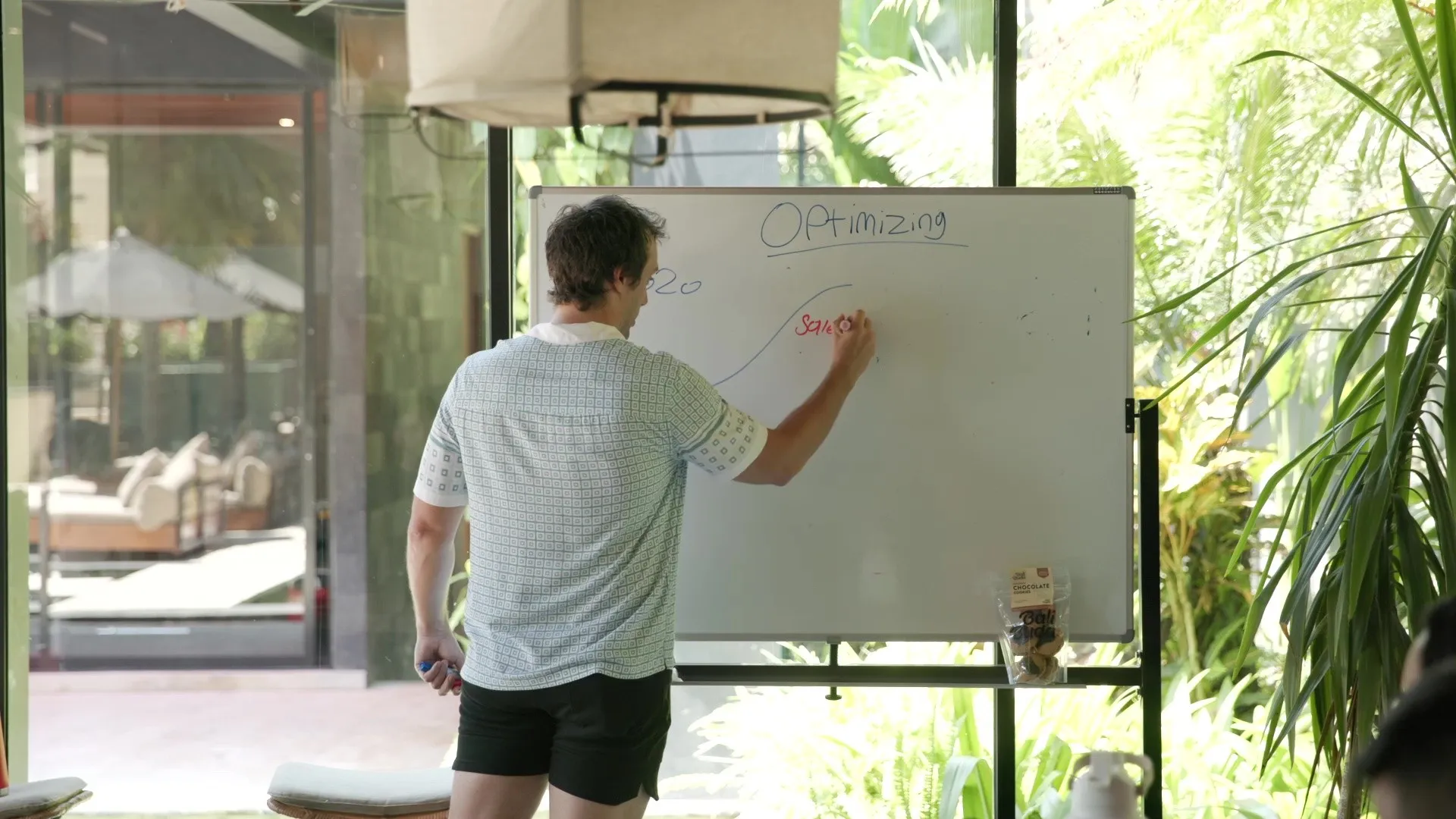
Jamie Stenhouse at a whiteboard during a retreat in Bali

Some of what depends on you only shows up once you’re away.

You also leave out steps without noticing, and your team has to guess at them.

Turning your judgement into rules someone else can follow is a skill of its own. So is spotting what will break before it does.

How we get you there

How the business runs while you’re away

  1. 1

    Pick the dates

    We start from the time you want off, and list what has to keep running without you.

  2. 2

    Document those jobs first

    You or your best person show us each job, and we document it in full, with the checks that matter.

  3. 3

    Capture the calls you’d normally take

    Simple decision trees let your team make them the way you would.

  4. 4

    Close the gaps after each trip

    Whatever waited for you becomes the next job we document, so the next break is easier.

What changes once it’s documented

  • Time away without checking your phone
  • Decisions made the way you would make them
  • Customers looked after while you’re away
  • A business that doesn’t depend on you being there

2 to 4 hours a week of your time. To your standard, or you don’t pay.

Case studies

Adam D

Adam D

Financial adviceAustralia· 4 weeks into the holiday

Four weeks into seven away

Four weeks into a seven-week trip, with far less work than expected.

“I’ve been away for 4/7 weeks so far. I’ve been working while away but nowhere near the level that I expected.”

Result: Less work while away

Erica

Erica

CoachingUnited States

Regular time away, and a better business for it

Five years in, the lesson is that the business does better with regular rest and time away from it.

“I wish I could have joined when I first launched my business 5 years ago. If only someone had told me it makes my business better when I regularly take time to rest and disconnect from it.”

Result: Regular time off

“I was able to travel to 23 countries in six different continents. So I was able to do that while the business also grew.”

TelecommunicationsCanada

View 80+ case studies

Questions owners ask

How long before I can take a real break?

You’ll get a realistic timeline on the call. We suggest starting with a week, then building up as each trip shows the next gaps.

What if something goes wrong while I’m away?

Something usually will, the first time, and it shows us what to document next. Decision trees cover the calls you’d normally take, so most decisions don’t need you.

My clients want to deal with me. Can that change?

Often, yes. When your team runs the work to your standard, and clients meet them early, many stop asking for you by name.

How does the guarantee work?

We judge every process against the recordings and examples you gave us. If one falls short, we revise it at no charge. If it still isn’t right, you get a full refund.

Go deeper

Longer reading, if you want the detail.

Rehearse by managing on one day

Before a long break, try managing the business on one set day a week.

Each time someone needs you outside that day, note why. Those are the gaps to close before you go.

Decision trees for the calls you’d take

Owners usually get called on holiday about a decision someone else couldn’t make.

A decision tree turns your judgement into a few questions with an answer at the end. Every answer points to the process to follow.

More help with this problem

A short video

Jamie explains how we get the work out of your head and document it with you.

The free assessment

28 questions and a few minutes for a scored report on where your business stands.

Take the assessment

Pick your dates. We start there.

Bring the dates you want off, and anyone who shares the decision. We find what to document first, and if we’re a fit, you get a fixed price on the call. You leave with a plan either way.

To your standard, or you don’t pay1,121 businesses since 201796 industries24 countries

  • Australia
  • United States
  • United Kingdom
  • New Zealand
  • Canada
  • Netherlands
  • Sweden
  • Ireland
  • Denmark
  • Germany
  • Finland
  • Singapore
  • Switzerland
  • South Africa
  • Japan
  • Philippines
  • Costa Rica
  • Greece
  • India
  • Monaco
  • Slovenia
  • Norway
  • Luxembourg
  • Spain