Implementing Lean Thinking for Sustainable Growth

Lean Thinking helps organizations achieve sustainable growth by focusing on value creation and reducing waste. Many leaders see Lean Thinking as a powerful tool for modern Business Management. For example:
A healthcare system used Lean Thinking to improve patient care and cut waiting times by 40%. Patient satisfaction rose from 62% to 80% after changes to the Process.
This approach fits many sectors, from Hiring Systems to manufacturing, as it empowers employees and supports continuous improvement.
Key Takeaways
Lean Thinking focuses on creating value for customers while reducing waste in processes.
Organizations can improve efficiency and quality by adopting Lean principles like Value Stream Mapping and 5S.
Leadership commitment is crucial for fostering a Lean culture and motivating teams to embrace change.
Employee engagement drives successful Lean initiatives; involving staff in improvement efforts boosts morale and productivity.
Continuous improvement is key; teams should always look for small ways to enhance processes and eliminate waste.
Mapping value streams helps identify inefficiencies and streamline workflows for better performance.
Implementing pull systems allows organizations to produce only what customers need, reducing excess inventory.
Measuring success with clear metrics helps organizations track progress and sustain Lean improvements over time.
Lean Thinking for Value Creation

What Is Lean Thinking
Lean Thinking serves as both a philosophy and a management framework. It guides organizations to focus on what truly matters to customers and to remove anything that does not add value. This approach began in Japanese manufacturing, where companies like Toyota looked for ways to improve efficiency and quality. Over time, Lean Thinking spread across the world and now helps many industries, from healthcare to services, achieve better results.
Lean Thinking encourages teams to ask, "Does this step add value for the customer?" If the answer is no, the process needs improvement.
The journey of Lean Thinking from its roots to global adoption can be seen in the following table:
Year | Event/Concept | Description |
|---|---|---|
1950 | Toyota's Production | Highlighted early inefficiencies compared to Ford. |
1984 | NUMMI Venture | Demonstrated Lean principles in the U.S. manufacturing context. |
1988 | Lean Manufacturing | The term was first coined, focusing on efficiency and customers. |
1990 | 'The Machine that Changed the World' | Explained Toyota's methods to Western industries. |
Lean Principles Overview
Lean Thinking relies on several core principles that help organizations create value and reduce waste. These principles guide every improvement effort:
Principle | Description |
|---|---|
Value | Define value from the customer’s perspective and focus on delivering what they are willing to pay for. |
Value Stream | Identify the entire process to deliver a product or service and eliminate non-value-adding steps. |
Flow | Ensure a smooth, continuous flow of work without interruptions or bottlenecks. |
Pull | Implement a pull system based on customer demand to avoid overproduction. |
Perfection | Continuously strive for perfection by eliminating waste and making incremental improvements. |
Respect for People: Organizations value and empower employees, seeing them as their most important asset.
Continuous Improvement (Kaizen): Teams always look for ways to improve processes and remove waste.
These principles help companies deliver better products and services while using fewer resources.
Value and Waste Reduction
Value creation stands at the heart of Lean Thinking. Teams work to understand what customers want and then design processes to deliver that value with as little waste as possible. Waste takes many forms, and Lean Thinking identifies several common types:
Transportation: Unnecessary movement of materials, information, or products.
Inventory: Excess stock not aligned with customer demand.
Motion: Inefficient human or machine movement.
Waiting: Delays in workflow, approvals, or material arrival.
Overproduction: Producing more than needed or earlier than needed.
Over-processing: Doing more work or adding more features than required.
Defects: Errors that require rework or cause scrap.
Underutilized Talent: Organizations sometimes waste people's skills by not involving them in problem-solving.
By reducing these wastes, companies can improve quality, lower costs, and respond faster to customer needs. Lean Thinking gives organizations a clear path to sustainable growth by focusing on value and eliminating waste at every step.
Building a Lean Culture
Leadership Commitment
Leaders play a critical role in shaping a Lean culture. They set the tone for the organization by modeling the behaviors they expect from others. Transformational leaders inspire teams to reach higher standards and support project success. When leaders actively participate in Lean initiatives, they show employees that improvement matters. Their involvement motivates teams to go beyond their basic responsibilities and contribute to the organization’s goals.
Transformational leadership links to project success and employee commitment.
Leaders who model desired behaviors foster a culture of continuous improvement.
Leadership commitment is the first and non-negotiable step in Lean transformation.
Senior leaders must engage, communicate the vision, and align systems to support the new culture.
Top leadership commitment leads to measurable improvements in organizations, including public hospitals.
A strong Lean culture begins with leadership. Without visible support from the top, Lean efforts often lose momentum.
Employee Engagement
Employee engagement drives the success of Lean initiatives. When employees participate in improvement activities, they feel valued and motivated. Their ideas often lead to practical solutions that improve processes. Teams that see their suggestions implemented become more invested in future changes.
Employee participation is critical for Lean success; without buy-in, plans remain unexecuted.
When employees feel heard and see their ideas used, their engagement increases.
Recognizing and celebrating achievements boosts morale and reinforces employees’ value.
Opportunities for growth and development keep the workforce motivated.
Leaders can encourage engagement by listening to employees, recognizing their contributions, and providing chances for learning. A culture that values input from all levels creates a strong foundation for Lean Thinking.
Continuous Improvement Mindset
A continuous improvement mindset helps organizations adapt and grow. Teams use structured problem-solving methods, such as A3 Thinking or Six Sigma, to address challenges. Consistent use of these approaches at every level ensures that improvement becomes part of daily work.
Organizations implement official problem-solving frameworks to guide improvement.
Consistent application of these methods across all levels builds a culture of recognition and empowerment.
Leadership support and employee engagement are essential for continuous improvement.
Collecting and acting on employee suggestions increases buy-in and participation.
Formal workflows and project management tools help streamline processes and ensure timely completion.
Advanced technology promotes collaboration and transparent communication.
A culture of continuous improvement encourages everyone to seek better ways of working. Over time, this mindset leads to lasting benefits and sustainable growth.
Lean Tools and Techniques
Value Stream Mapping
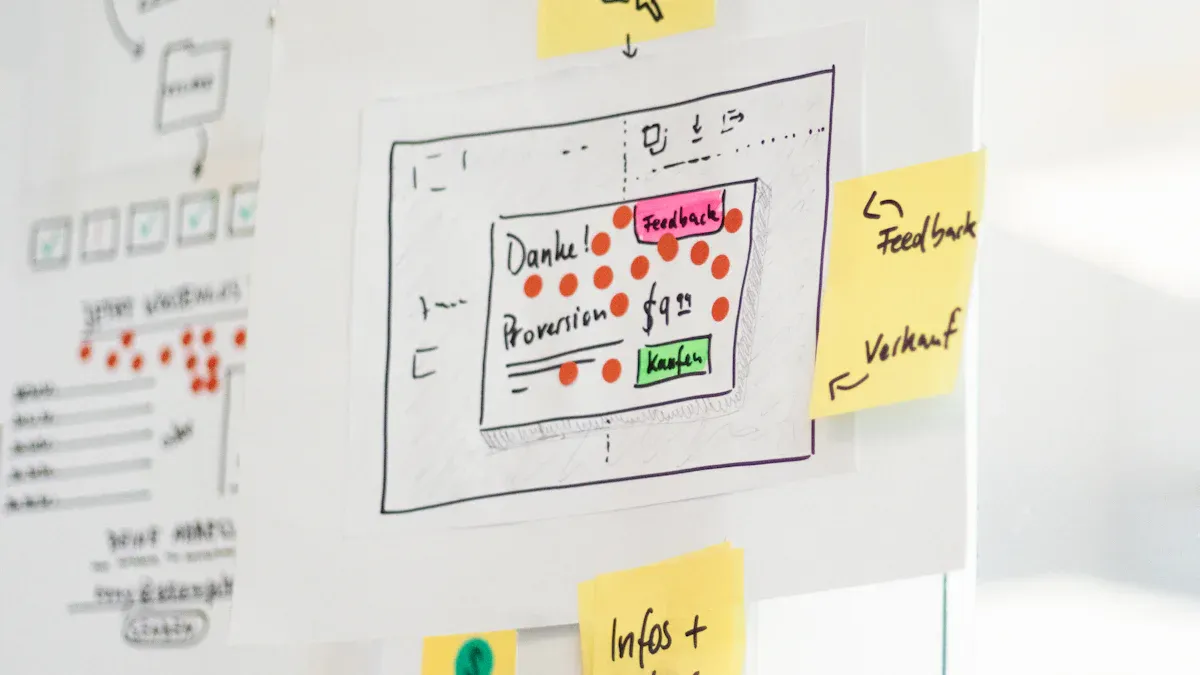
Value Stream Mapping (VSM) stands as a powerful Lean tool for organizations that want to improve their processes. This method analyzes and designs the flow of materials and information needed to deliver a product or service. Teams use VSM to see the big picture and spot areas that slow down production or add unnecessary steps. By mapping out each stage, they can find ways to make work smoother and faster.
Identifying Waste
VSM helps teams identify waste by highlighting steps that do not add value. Waste can appear as delays, extra movement, or excess inventory. When teams see these issues on a map, they can target them for removal. This approach allows organizations to streamline operations and boost productivity. Many companies combine VSM with process mapping. While VSM gives a strategic overview, process mapping focuses on detailed tasks. Using both methods together provides a complete view of inefficiencies.
Value Stream Mapping shows the overall flow and uncovers hidden waste.
Process Mapping breaks down each task for deeper analysis.
Teams use both tools to find and fix problems quickly.
Visualizing Processes
Visualizing processes with VSM makes complex workflows easier to understand. Teams draw diagrams that show every step, from start to finish. These visuals help everyone see where work gets stuck or repeated. When employees understand the process, they can suggest better ways to do the job. Clear maps also make it easier to train new staff and share best practices.
Tip: Use simple symbols and colors in your value stream map to highlight problem areas and track improvements over time.
5S System
The 5S System organizes the workplace for efficiency and safety. It uses five steps: Sort, Set in order, Shine, Standardize, and Sustain. Each step builds on the last to create a clean and orderly environment. Companies that use 5S see big improvements in performance.
Benefit | Percentage Improvement |
|---|---|
Lead Time Reduction | |
Reduction in Safety Incidents | 40%-70% |
Improved Customer Satisfaction | 10%-40% |
Increase in Productivity | 10%-50% |
A well-organized workspace reduces mistakes and keeps employees safe. Teams can find tools quickly and spend less time searching for materials. Over time, these small changes add up to major gains.
Kaizen Practices
Kaizen means "continuous improvement." This practice encourages everyone in the organization to look for small ways to make things better every day. Employees at all levels join in, sharing ideas and solving problems together. Kaizen builds a culture where change is normal and improvement never stops.
Benefit | Description |
|---|---|
Continuous Improvement | Teams make ongoing enhancements, leading to lasting operational gains. |
Employee Engagement | Staff members take part in improvement efforts, which builds teamwork and collaboration. |
Cost Reduction | Removing waste helps organizations use resources wisely and save money. |
Increased Productivity | Streamlined processes let teams do more with less, raising overall performance. |
Kaizen encourages everyone to spot problems and suggest solutions.
The focus on small, steady progress leads to big results over time.
Standardized Work
Standardized work forms the backbone of Lean Thinking. It refers to the practice of documenting and following the best-known methods for each task. Teams use standardized work to ensure that everyone performs a process in the same way every time. This approach creates consistency and reliability across the organization.
When organizations implement standardized work, they set a stable baseline for improvement. Employees can identify what works well and what needs change. Taiichi Ohno, a key figure in Lean, once said, "Without Standard Work, there is no Kaizen." This statement highlights the importance of having clear, repeatable processes before making improvements. If teams do not follow a standard, they cannot measure progress or know if a change leads to better results.
Standardized work supports Lean improvements in several ways:
It establishes consistent, documented processes that everyone follows.
It creates a stable baseline for identifying and implementing improvements.
It enables organizations to measure progress and sustain improvements over time.
It prevents teams from slipping back into old, less efficient habits.
A stable process allows teams to spot problems quickly. When everyone follows the same steps, any variation stands out. Teams can then investigate the cause and find solutions. This method also makes training new employees easier. New team members learn the correct way to do a task from the start, which reduces errors and increases productivity.
Standardized work does not mean processes never change. Instead, it encourages continuous improvement. When a team finds a better way to do something, they update the standard. This cycle of improvement and documentation keeps the organization moving forward.
Note: Standardized work is a foundational element of Lean methodologies. It ensures that gains from Lean tools, such as 5S or Kaizen, are not temporary. By maintaining standards, organizations prevent regression to less efficient practices and sustain improvements over time.
Many organizations use visual aids, such as checklists or diagrams, to support standardized work. These tools help employees remember each step and maintain quality. Teams often review and refine these standards during regular meetings.
Lean Implementation Steps
Creating Customer Value
Organizations begin Lean implementation by focusing on what customers truly value. They must understand the needs and expectations of their customers before making changes. This approach helps teams deliver products and services that meet or exceed customer expectations while removing unnecessary steps.
The process for creating customer value includes several key steps:
Value: Teams identify what customers want and determine which features or services matter most. This understanding helps set the right price and remove wasteful activities.
Value Stream: Teams analyze the entire journey of a product or service. They look for ways to strengthen supply chains and build strong customer relationships.
Flow: Teams work to keep operations moving smoothly. They aim to reduce interruptions and delays so customers receive value quickly.
Pull: Teams produce goods or services only when customers request them. This method balances production with actual demand.
Perfection: Teams set high standards for quality. They look for ways to improve processes and remove poor performance.
Tip: Teams should regularly ask, "Does this step add value for the customer?" This question keeps everyone focused on what matters most.
Mapping Value Streams
Mapping value streams helps organizations see every step in their processes. Teams use Value Stream Mapping (VSM) to create a visual map of how work flows from start to finish. This tool shows where value is added and where waste occurs.
The steps for mapping value streams include:
Identify the process: Teams choose a specific product or service to analyze.
Map the current state: Teams document each step, including how long each part takes.
Analyze waste: Teams look for delays, bottlenecks, and other inefficiencies.
Design the future state: Teams create a new map that removes waste and improves flow.
Implement and improve: Teams put the new process into action and keep making small changes.
Value Stream Mapping helps teams find bottlenecks and areas for improvement. It acts as a strategic tool for business analysts who want to make processes faster and more efficient. By visualizing the workflow, teams can target specific problems and measure their progress.
Establishing Flow
Establishing flow means making sure work moves smoothly through each step of the process. Teams focus on reducing waiting times, unnecessary movement, and rework. This approach helps organizations deliver value to customers faster and with fewer errors.
The benefits of establishing flow include:
Benefit | Description |
|---|---|
Minimizes idle time in the process. | |
Reduce unnecessary movement | Streamlines operations by eliminating excess motion. |
Reduce rework loops | Decreases the need for corrections, enhancing efficiency. |
Reduce large batch behavior | Prevents issues from being hidden, promoting visibility. |
Lean transformation highlights the importance of improving flow across the value stream. Local improvements alone do not always help the whole process. Teams must look at the entire workflow to avoid hidden problems. A focus on flow increases overall output and makes customers happier.
By encouraging team members to find and fix problems, organizations build a culture of continuous improvement. This sense of ownership helps Lean Thinking succeed and supports long-term growth.
Pull Systems
Pull systems help organizations produce only what customers need, when they need it. This approach stands in contrast to traditional push systems, which rely on forecasts and often lead to overproduction. In a pull system, each step in the process begins only after receiving a signal from the next step, usually triggered by actual customer demand.
The table below highlights the key differences between push and pull systems:
Feature | Push System | Pull System |
|---|---|---|
Production Trigger | Based on forecasts | Based on actual customer demand |
Inventory Management | No limit on WIP inventory | Regulated WIP inventory based on demand |
Costs | Higher due to unsold merchandise and storage | Lower due to minimal inventory levels |
Product Availability | Anticipates demand to ensure availability | Reacts to orders, producing only what is needed |
Customization Options | Requires stock of various variants | Allows for minimized inventory with customer-triggered customization |
Pull systems offer several advantages. They help organizations reduce waste by limiting excess inventory and unnecessary production. Teams can respond quickly to changes in customer preferences because they do not have large amounts of unsold products. This method also supports customization, as products are made to order rather than kept in stock.
Tip: Pull systems work best when teams use visual signals, such as Kanban cards, to show when more materials or products are needed.
Manufacturing companies often use pull systems to move from batch production to one-piece flow. This shift helps them spot problems faster and improve quality. Service organizations, such as restaurants or repair shops, also benefit from pull systems by preparing items only when customers request them. By focusing on real demand, organizations can save money, reduce storage needs, and deliver better service.
Pursuing Perfection
Pursuing perfection means never settling for "good enough." Lean organizations strive to improve every process, every day. They encourage everyone to look for ways to make work better and remove anything that does not add value.
Best practices for pursuing perfection include:
Best Practice | Description |
|---|---|
Eliminate Waste | Continually identify and remove non-value added activities from all processes. |
Employee Involvement | Engage employees in continuous improvement and problem-solving activities. |
Rapid Improvement Framework | Use a plan-do-check-act cycle to achieve results quickly. |
Use of Metrics | Track progress with real-time data and feedback. |
Whole System Perspective | Improve processes across the entire organization, not just in one area. |
Organizational Learning | Share best practices and lessons learned across teams and projects. |
Lean organizations believe that small, steady improvements add up over time. They use rapid improvement cycles, such as Plan-Do-Check-Act (PDCA), to test changes and learn from results. Teams measure their progress with clear metrics and adjust their actions based on feedback.
Note: The pursuit of perfection is a journey, not a destination. Teams must adapt to new challenges and keep finding better ways to serve customers.
Everyone in the organization plays a role in this journey. Leaders set the vision, but employees drive daily improvements. By sharing ideas and learning from each other, teams create a culture where excellence becomes the standard. Over time, this mindset leads to higher quality, lower costs, and greater customer satisfaction.
Overcoming Lean Challenges
Change Resistance
Many organizations face resistance when they try to implement Lean Thinking. Employees may worry about new processes or fear losing their jobs. Leaders often see hesitation when teams do not understand the reasons for change. To address these concerns, organizations can use several proven strategies:
Leaders communicate the purpose of Lean clearly and early.
Teams start with small, manageable changes to build confidence.
Managers address emotional responses and listen to concerns.
Organizations introduce digital tools that solve real problems.
Leaders create clear roles and responsibilities for everyone involved.
Teams use a visible change management framework.
Managers reward adaptability and positive behavior.
Employees share feedback and improvement ideas from the ground up.
Leaders set the example by participating in Lean activities.
These steps help teams feel involved and valued. When everyone understands the "why" behind Lean, they become more open to change.
Sustaining Lean Initiatives
Sustaining Lean improvements requires more than a one-time effort. Many organizations struggle to keep Lean alive after the first wave of changes. They may fall back into old habits or lose focus when leaders move on. To prevent this, organizations need a proactive approach.
“Businesses miss out on chances to innovate when they don’t think of sustainability proactively as a long-term strategy.”
Organizations can build long-term success by collecting data, engaging employees, and using continuous improvement frameworks. Training at all levels helps teams develop Lean skills. Structured methods like Lean Manufacturing, Six Sigma, and the PDCA cycle guide teams to find and keep improvements. When employees see that their ideas matter, they stay motivated to look for better ways to work.
A strong Lean culture values learning and sharing best practices. Leaders support this by encouraging teamwork and recognizing progress. Over time, these habits help organizations adapt to new challenges and keep Lean Thinking at the center of their operations.
Measuring Success
Measuring Lean success helps organizations see what works and where they can improve. Teams use different metrics to track progress and guide decisions.
Metric | Description |
|---|---|
Financial Metrics | Show if Lean efforts increase profit or reduce costs. |
Cost per Unit | Reveals the true cost of each product, helping to target waste. |
Inventory Turns | Measures how often stock sells, showing how well resources move. |
Overall Equipment Effectiveness | Combines availability, performance, and quality to find hidden problems. |
Throughput | Counts the number of good parts made per hour, showing output. |
Improvement Ideas per Employee | Tracks how many suggestions each team member gives, showing engagement. |
First Pass Yield (FPY) | Shows the percentage of products that pass checks the first time. |
Defects Per Million Opportunities | Measures defects, helping teams compare quality over time. |
Schedule Compliance | Checks if teams follow the plan, revealing bottlenecks. |
Lead Time | Measures the time from order to delivery, showing efficiency. |
% Scrap | Tracks material waste, linking cost savings to sustainability. |
Energy per Unit | Measures energy use for each product, highlighting inefficiencies. |
Teams review these metrics often. They use the results to celebrate wins and find areas for improvement. By measuring success, organizations keep Lean Thinking strong and support sustainable growth.
Lean Thinking in Action
Manufacturing Case Study
Many manufacturing organizations have used Lean Thinking to transform their systems and teams. These companies focused on people, process improvement, and sustainable growth. The table below highlights several real-world examples from different industries:
Case Study Description | Link |
|---|---|
Brazilian agrobusiness developed a unique management system focusing on people. | |
Brazilian manufacturing plant installed a dojo to address safety and quality issues. | |
Manuelita Sugar Mill in Colombia adopted Daily Management to improve leadership and operations. | |
Norwegian furniture manufacturer Haugstad Møbel transformed its culture through Lean Thinking. | |
Spanish construction company delivered a project ahead of schedule using Lean Thinking. | |
Manufacturer of fish feed in Chile improved yield and eliminated inventory gaps with Lean Thinking. |
These case studies show how systems and teams can achieve better safety, higher quality, and faster delivery. For example, the Norwegian furniture manufacturer improved its culture and performance by involving employees at every level. The Chilean fish feed producer closed inventory gaps and increased yield by focusing on process flow and waste reduction. Each organization saw sustainable results by empowering teams and using Lean Thinking as a foundation for change.
Service Sector Example
Lean Thinking also brings strong results to the service sector. Many service organizations have improved their systems and teams by involving employees in continuous improvement. By identifying and removing waste, these companies created smoother workflows and higher customer satisfaction. Employees who participate in process optimization help their teams reduce costs and deliver better service. For example, a law firm transformed its legal case intake process, and a hospital improved patient care by streamlining daily routines. These changes led to faster response times and more reliable outcomes for clients and patients.
Tip: Service organizations can start small by mapping out one process and asking team members where they see delays or extra steps.
Key Takeaways from Success Stories
Adaptability matters. Flexible approaches help systems and teams succeed because one method does not fit every situation.
Employee engagement drives results. Teams that feel heard and valued contribute more ideas and support continuous improvement.
A culture of continuous improvement leads to lasting change. Regular communication and daily routines help teams keep Lean Thinking alive.
Coaching and targeted support can turn reserved team members into confident leaders.
Lean Thinking can increase productivity and labor utilization without extra costs.
Reducing cycle times in healthcare improves both patient experience and staff productivity.
Organizations have also learned important lessons from failed Lean efforts:
Lack of training and leadership support can cause Lean initiatives to fail.
Teams may resist change if they do not understand the benefits or feel included.
Sustaining Lean practices requires leaders to stay involved and communicate clearly.
By learning from both successes and challenges, systems and teams can build a strong foundation for sustainable growth with Lean Thinking.
Lean Thinking drives sustainable growth by building a culture of continuous improvement and strong leadership. Teams see lasting benefits when leaders model a growth mindset and create safe spaces for problem-solving. Organizations that start their Lean journey often balance economic, social, and environmental goals. Many companies, such as Toyota and Intel, have shown that Lean can improve quality and reduce waste. Anyone interested in learning more about Lean Thinking and its impact on systems and teams can reach out for further support.
Start your Lean journey today—small steps can lead to big results.
FAQ
What is the main goal of Lean Thinking?
Lean Thinking aims to create more value for customers by removing waste from processes. Teams focus on what customers need and work to deliver products or services efficiently.
How does Lean Thinking help organizations grow sustainably?
Lean Thinking encourages continuous improvement and waste reduction. Organizations use fewer resources and improve quality. This approach supports long-term growth and better customer satisfaction.
Can Lean Thinking work outside manufacturing?
Yes. Lean Thinking applies to many sectors, including healthcare, education, and services. Teams in any industry can use Lean tools to improve processes and outcomes.
What are common Lean tools?
Teams often use Value Stream Mapping, 5S, Kaizen, and Standardized Work. These tools help identify waste, organize workspaces, and support ongoing improvements.
How do leaders support Lean initiatives?
Leaders set clear goals and model Lean behaviors. They encourage employee involvement and provide resources for training. Leadership commitment helps teams stay focused on improvement.
What challenges do teams face with Lean Thinking?
Teams may resist change or struggle to keep improvements going. Clear communication, training, and leadership support help overcome these challenges.
How can organizations measure Lean success?
Organizations track metrics like lead time, defect rates, and employee suggestions. Regular reviews help teams see progress and find areas for further improvement.
Is Lean Thinking a one-time project?
No. Lean Thinking is an ongoing journey. Teams continue to look for better ways to work and adapt to new challenges over time.


