Steps to Apply Lean Methodology for Faster Results

Lean Methodology stands as a proven approach for organizations aiming to reduce waste and achieve faster results. This system focuses on three core principles: eliminating waste, promoting continuous improvement, and respecting people. Teams and systems that adopt Lean Methodology often report impressive results:
Hospitals see shorter patient stays and better resource allocation.
Most studies highlight efficiency improvements and cost reductions.
Healthcare professionals and patients experience greater satisfaction.
The benefits of Lean extend beyond healthcare. Companies across industries gain:
Benefit | Description |
|---|---|
Increased efficiency | Teams identify and remove non-value-adding processes to make better use of resources. |
Enhanced stakeholder visibility | Clients and customers receive better products and services through continuous feedback. |
Better adaptability | Systems adjust quickly to changing demands, ensuring smoother workflows. |
These steps work for any experience level and can help any business or team reach their goals more quickly.
Key Takeaways
Lean Methodology focuses on reducing waste to achieve faster results in any organization.
Understanding customer value is crucial. Teams must identify what clients truly need to drive improvements.
Value stream mapping helps visualize processes, identify bottlenecks, and streamline workflows.
Eliminating waste using the TIMWOODS framework can significantly enhance efficiency and productivity.
Creating smooth flow in processes ensures timely delivery of products and services, improving customer satisfaction.
Implementing pull systems aligns production with actual customer demand, reducing excess inventory.
Continuous improvement, or Kaizen, encourages all employees to contribute ideas for ongoing enhancements.
Tracking progress with clear metrics helps teams measure success and adapt quickly to challenges.
What Is Lean Methodology?
Lean Methodology is a management approach that helps organizations deliver better results by focusing on value and reducing waste. This system began in manufacturing but now supports teams and systems in healthcare, IT, and many other industries. The Virginia Mason Medical Centre adapted Lean principles from the Toyota production system to improve hospital efficiency, showing how Lean Methodology works in complex settings.
Core Principles of Lean
Lean Methodology relies on several core principles that guide teams and systems toward faster and more efficient outcomes. Experts and recognized organizations outline these principles as follows:
Define Value from the Customer’s Perspective
Teams must understand what clients truly need and want. Value is defined by how well products or services meet those needs.Describe the Value Stream for Each Product or Service
Systems map out every step in their process. This helps identify activities that do not add value and highlights areas for improvement.Create Flow in Each Value Stream
Teams arrange tasks so work moves smoothly from one step to the next. This reduces delays and keeps progress steady.Produce at the Pace (Pull) of Actual Customer Demand
Systems respond to real customer requests instead of predictions. This approach lowers inventory and speeds up delivery.Strive to Continuously Improve All Business Operations
Teams adopt a mindset of ongoing improvement. They look for ways to make processes better every day.
Lean is not just for manufacturing. It applies to healthcare, IT, and other sectors. Its main goal is to deliver value to customers, not just cut costs. Lean requires a cultural shift and ongoing effort from everyone involved.
Why Lean Delivers Faster Results
Lean Methodology helps teams and systems achieve faster results by connecting people, processes, and workflows. This approach improves communication and leadership, which leads to timely actions and effective management.
Lean Management allows organizations to respond swiftly to changing customer needs, enhances product quality, and reduces operational costs, thereby leading to faster results.
Lean approaches at Intermountain Healthcare resulted in significantly reduced turnaround times for lab reports and streamlined various processes, showcasing the methodology's effectiveness in achieving faster results.
Systems and teams benefit from Lean Methodology because it encourages everyone to focus on what matters most. By removing waste and improving flow, organizations deliver products and services more quickly. Lean also supports innovation and quality, making sure clients receive the best possible outcomes.
Lean Methodology is a continuous journey. Teams and systems must work together, share ideas, and keep improving. This collaborative effort empowers employees and creates a culture where everyone strives for excellence.
Define Customer Value
Identifying What Customers Value Most
Systems and teams that apply Lean Methodology begin by understanding what their clients truly need. Customer value drives every improvement. Teams focus on customer needs and expectations, using several methods to gather insights. CRM systems track purchase history and customer interactions, revealing patterns in behavior. Social media platforms show customer sentiment and brand perception. In today's digital age, businesses analyze large amounts of data to find trends that might not be obvious through direct observation.
Tip: Teams should use multiple sources to understand customer value. Data from CRM systems, social media, and direct feedback all contribute to a complete picture.
Many frameworks help clarify what customers value. The table below summarizes some useful tools:
Framework | Purpose |
|---|---|
Competitive Value Map | Compares price and job performance improvement in a competitive context. |
Value Perception Gap Analysis | Highlights misalignments between actual and perceived value. |
Value Evolution Timeline | Projects changes in value over time. |
Comparative Testing | Measures improvement through controlled testing. |
Economic Modeling | Calculates financial impacts of performance improvements. |
Customer Value Interviews | Captures customer-reported value through structured discussions. |
Usage Analytics | Analyzes behavioral data to measure value realization. |
Total Cost of Ownership Analysis | Assesses all cost factors associated with a product. |
Teams gather customer feedback using surveys, interviews, and focus groups. Surveys and online questionnaires help confirm theories about customer needs. Interviews provide deeper understanding of how clients use products or services. Focus groups generate diverse perspectives and spark insightful conversations, especially when exploring new ideas.
Note: Gathering customer feedback is a continuous process. Teams should revisit feedback regularly to keep up with changing needs.
Value-Added vs. Non-Value-Added Activities
Distinguishing between value-added and non-value-added activities is essential for systems and teams. Value-added activities transform inputs into outputs that meet customer needs. Non-value-added activities consume resources but do not improve the product or service in the customer's eyes.
Activity Type | Description |
|---|---|
Value-Added Activities | Directly contribute to improving care or enhancing the customer experience. |
Non-Value-Added | Use resources without adding value from the client’s perspective. |
Teams use these criteria to identify non-value-added activities:
Activities that consume resources without adding value.
Activities that can be eliminated or reduced to improve efficiency.
Teams should involve staff and clients when reviewing activities. This approach ensures that every step in the process aligns with customer expectations.
By focusing on customer value, systems and teams can remove waste and deliver better results. Lean Methodology encourages ongoing evaluation of what matters most to clients, helping organizations adapt quickly and stay competitive.
Map the Value Stream
Visualizing the Process
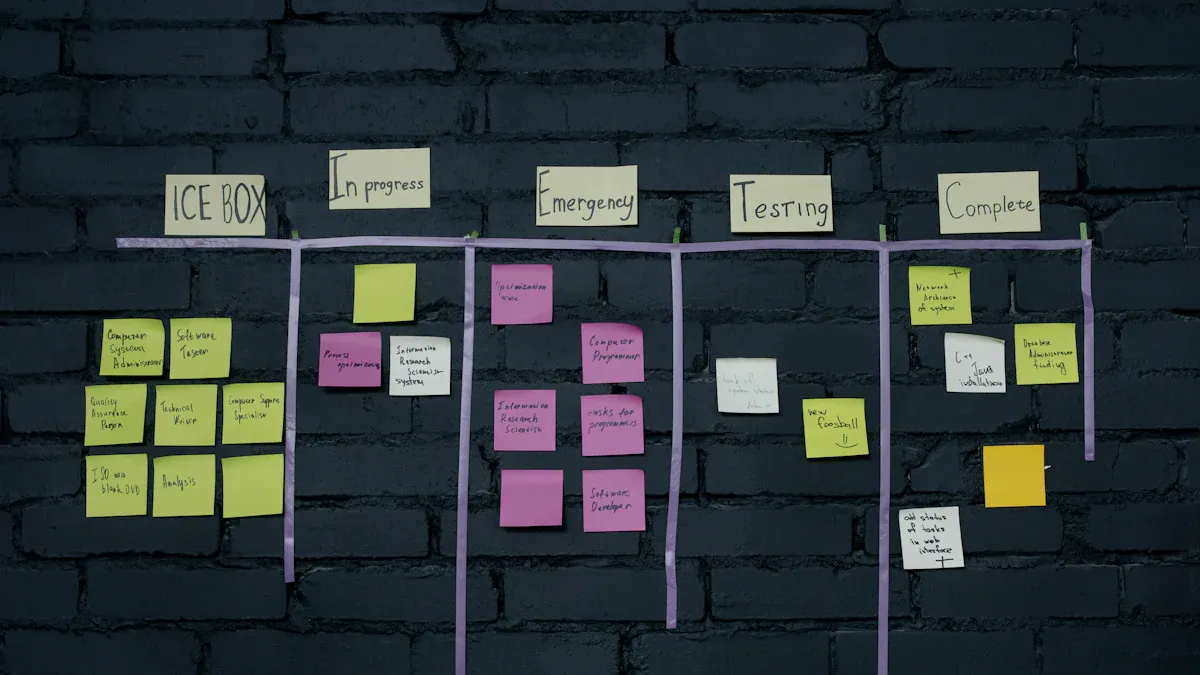
Systems and teams use value stream mapping to see how work flows from start to finish. This method helps everyone understand each step in a process and spot areas for improvement. Value stream mapping forms a key part of Lean Methodology, allowing organizations to visualize both materials and information as they move through a system.
To create a value stream map, systems and teams follow these steps:
Define the Problem
Walk through the process to identify issues that slow down work or cause errors.Assemble a Team
Gather people from different departments who know the process well. Their insights help build an accurate map.Draw a Current State Map
Collect data and sketch out the process as it works today. Include every step, decision point, and handoff.Create a Future State Map
Analyze the current map to find improvements. Design a new map that removes waste and streamlines flow.Implement an Action Plan
List steps needed to move from the current state to the future state.Monitor Action Plan
Check progress regularly and adjust the plan as needed.
Tip: Involving team members who work with the process every day leads to more accurate maps. Their feedback uncovers hidden problems and sparks new ideas.
Spotting Waste and Delays
Value stream mapping helps systems and teams identify bottlenecks and waste that slow down delivery. By breaking down each step and measuring time spent, teams can see where delays happen and which tasks take the longest.
Step | Description |
|---|---|
1 | Dissect each step using time data to find the longest tasks and queues. |
2 | Track where information is lost or re-entered to classify work as value-added, necessary non-value-added, or waste. |
3 | Evaluate each lane for the seven wastes: overproduction, waiting, transport, overprocessing, inventory, motion, and defects. |
4 | Calculate Process Cycle Efficiency (PCE) to compare processes against best practices. |
5 | Open discussions across teams to reveal hidden issues and prioritize items that add customer value. |
Industry studies show that visualizing delays and constraints uncovers system-level problems. Rope manufacturing and enterprise IT services have improved communication and collaboration by using value stream mapping. Systems and teams benefit from open dialogue, which helps identify obstacles quickly and leads to more effective solutions.
Champion openness and transparency by encouraging team members to share challenges. This culture helps systems and teams find problems faster and improve accuracy in mapping.
Value stream mapping gives systems and teams a clear picture of their workflow. By identifying waste and delays, organizations can focus on changes that deliver the most value to clients. This step supports faster results and better efficiency in Lean Methodology.
Eliminate Waste with TIMWOODS
TIMWOODS: Types of Waste
Systems and teams use the TIMWOODS framework to identify eight types of waste in their processes. Each type of waste reduces efficiency and slows down results. The table below explains these wastes:
Type of Waste | Description |
|---|---|
Transport/Transportation | Unnecessary movement of products or materials, such as extra handling steps. |
Inventory | Excess inventory that ties up capital and risks damage or obsolescence. |
Motion | Excess movement by employees that does not add value. |
Waiting | Idle time when no work is being done, such as waiting for materials. |
Overproduction | Producing more than what is ordered, leading to excess inventory. |
Overprocessing | Adding features that do not provide value to the customer. |
Defects | Production of defective parts that require rework or scrapping. |
Underutilized Skills | Failing to fully utilize the knowledge and skills of employees. |
Teams that recognize these wastes can target improvements that deliver faster results and greater value to clients.
Steps to Remove Waste
Systems and teams apply practical steps to eliminate each type of waste. These actions help streamline workflows and improve productivity. The table below lists recommended steps:
Type of Waste | Practical Steps to Eliminate |
|---|---|
Transportation | Reorganize workspace layouts and streamline workflows. Use value stream mapping to identify excess transportation. |
Excess Inventory | Implement Just-In-Time (JIT) systems and use demand forecasting tools to align stock levels with customer needs. |
Wasted Motion | Organize workspaces for easy access to tools and materials. Use ergonomic solutions to reduce physical strain. |
Waiting | Balance workloads, maintain equipment, and cross-train employees to minimize downtime. |
Overproduction | Align production schedules with actual demand. Standardize processes to avoid excess production. |
Overprocessing | Simplify processes by focusing on customer value. Use Lean tools like Six Sigma to eliminate unnecessary steps. |
Defects | Implement routine inspections. Train employees to identify and resolve issues early in production. |
Underutilization | Provide training and development opportunities. Encourage employee involvement to maximize their skills. |
Tip: Systems and teams should involve staff in identifying waste and designing solutions. Employee input leads to more effective changes.
Removing waste has a direct impact on speed and efficiency. Organizations that use Lean Methodology report measurable improvements:
A McKinsey study shows that lean project management can boost productivity by 50–60% in construction.
Boeing reduced production time by 50% and defects by 75% after applying lean principles.
Intuit shortened development cycle time by minimizing handoffs and optimizing processes.
Systems and teams that focus on waste elimination deliver products and services faster. Clients benefit from improved quality and quicker turnaround. Lean Methodology empowers teams to work smarter and achieve better results.
Create Flow and Pull
Streamlining Work Steps
Systems and teams that apply Lean Methodology focus on arranging processes for smooth, uninterrupted flow. They aim to move work from one step to the next without delays or bottlenecks. This approach helps organizations deliver products and services faster.
Several strategies support the creation of flow:
Strategy | Description |
|---|---|
Collaboration | Involve team members early to gather insights and ensure successful changes. |
Visualization | Use visual tools to spot process issues and improve communication. |
Continuous Improvement | Review workflows regularly to find and fix bottlenecks. |
Teams also use practical methods to keep work moving:
Implement just-in-time practices to align material and information flow with demand.
Utilize the 5S Methodology to organize workspaces and reduce clutter.
Train employees to recognize and address flow disruptions quickly.
Organizations often organize "Lean Flow Days" for teams to experiment with new techniques. They appoint "Lean Champions" to promote best practices across departments. Suggestion systems reward employees who offer ideas that improve flow.
Tip: Systems and teams should encourage open communication. Team members who share challenges help uncover hidden problems and spark solutions.
Implementing Pull Systems
Pull systems help organizations respond directly to customer demand. Instead of producing goods or services based on forecasts, teams start work only when clients request it. This method reduces excess inventory and speeds up delivery.
The benefits of pull systems stand out in both manufacturing and service industries:
Benefit | Description |
|---|---|
Produces goods only as needed, lowering storage costs. | |
Enhanced Responsiveness | Adapts quickly to customer demand, increasing satisfaction. |
Waste Reduction | Focuses on actual consumption, helping teams eliminate inefficiencies. |
Increased Efficiency | Streamlines operations for cost-effective results. |
Teams often use Just-In-Time production to match output with customer orders. This approach minimizes inventory levels and storage costs. It also reduces the risk of excess or obsolete inventory.
Pull systems work by:
Aligning closely with demand-driven operations.
Minimizing waste and reducing excess inventory.
Balancing Workloads and Reducing Delays
Systems and teams must balance workloads to keep processes running smoothly. They use several best practices to prevent delays and maintain steady progress.
Best Practice | Description |
|---|---|
Distributes tasks evenly among operators and machines, reducing bottlenecks. | |
Eliminate Interruptions | Stops bottlenecks before they start, keeping work on track. |
Match Demand (Takt Time) | Ensures work moves at the right speed, preventing overwork and wasted time. |
Minimize Handoffs | Cuts back-and-forth communication, speeding up delivery. |
Standardize Tasks | Provides clear guidelines and training, reducing confusion. |
Use Automation | Speeds up processes and reduces mistakes. |
Monitor Progress | Tracks daily progress and allows quick adjustments. |
Teams that follow these practices deliver products and services faster. Clients benefit from shorter wait times and improved quality. Lean Methodology empowers systems and teams to create flow, implement pull systems, and balance workloads for better results.
Measure, Standardize, and Improve
Setting Metrics and Tracking Progress
Systems and teams need clear metrics to measure the success of Lean Methodology. Tracking progress helps everyone see where improvements work and where more effort is needed. The table below shows key indicators that organizations use to measure Lean success:
Key Indicator | Description |
|---|---|
Reduction in Waste | Measures the decrease in waste across processes, showing efficiency improvements. |
Increased Efficiency | Assesses productivity and cycle times to evaluate operational efficiency. |
Improved Quality | Evaluates defect rates and customer satisfaction to determine quality enhancements. |
Employee Engagement and Satisfaction | Gauges employee feedback and participation to measure workforce involvement and morale. |
Continuous Improvement and Innovation | Tracks the number of improvement ideas and employee involvement in innovation initiatives. |
To track these metrics, systems and teams use project management tools that fit their workflows. These tools allow immediate recording of results, sharing of data, and access to learning materials. Online dashboards and customizable reports help teams monitor daily progress and communicate results. Common Lean tools include process flowcharts, 5 why analysis, fishbone diagrams, 5S dashboards, A3 reports, PDCA cycles, and value stream maps.
Tip: Teams that track progress regularly can spot problems early and adjust quickly.
Standardizing Best Practices
After making improvements, systems and teams must standardize successful changes. Standardization ensures that everyone follows the best way to do each task. This step prevents old habits from returning and keeps processes efficient.
Document optimized processes clearly.
Train employees so they understand new methods and their benefits.
Stay flexible in problem-solving, since one approach may not fit every situation.
Review and update standards as new improvements emerge.
Note: Standardization is not about rigid rules. It helps teams keep improvements and adapt to new challenges.
Continuous Improvement (Kaizen)
Continuous improvement, or Kaizen, is a core part of Lean Methodology. Systems and teams encourage everyone to suggest ideas for making work better. Small, regular changes add up to big gains over time.
Kaizen involves all employees in finding and solving problems.
Teams make small, incremental changes instead of waiting for big projects.
Regular improvement meetings and feedback loops keep everyone involved.
Leaders support a culture where experimentation and learning are valued.
Key factors for sustaining Lean improvements include strong leadership, teamwork, and a clear vision for the future. Engaged employees who feel ownership over their work help maintain results. Recognizing and rewarding contributions boosts morale and motivates teams to keep improving.
Teams that practice Kaizen see higher efficiency, better quality, and lasting results. Continuous improvement keeps organizations growing and adapting to new challenges.
Lean Methodology guides systems and teams through five essential steps:
Understand what customers value.
Map every step in the value stream.
Remove waste to create smooth flow.
Align production with customer demand.
Continuously improve all processes.
Systems and teams achieve faster results, less waste, and greater customer value by focusing on these principles. Tracking progress with clear goals and celebrating improvements boosts morale.
Start with one step and build momentum. Reach out to learn how Lean Methodology can transform your organization.
FAQ
What is Lean Methodology?
Lean Methodology helps systems and teams improve efficiency by removing waste. They focus on delivering value to clients. This approach uses simple steps that anyone can follow.
How do systems and teams identify waste?
Teams use tools like value stream mapping and the TIMWOODS framework. They look for steps that do not add value for clients. They ask employees to share ideas about where waste occurs.
Can Lean Methodology work outside manufacturing?
Lean works in healthcare, IT, and service industries. Systems and teams adapt Lean principles to fit their workflows. They see faster results and better quality in many settings.
What is a value stream map?
A value stream map shows every step in a process. Teams use it to find delays and waste. They work together to create accurate maps and plan improvements.
How does Lean improve customer value?
Systems and teams listen to clients and study feedback. They remove steps that do not help the client. This focus leads to better products and services.
What is continuous improvement (Kaizen)?
Kaizen means making small changes often. Teams meet regularly to share ideas. They test new methods and keep improving their work.
How do systems and teams measure Lean success?
Teams track metrics like waste reduction, efficiency, and quality. They use dashboards and reports to see progress. They celebrate improvements and share results with everyone.
Is Lean Methodology hard to start?
Lean uses simple steps. Teams begin by mapping processes and finding waste. They make small changes and build momentum. Anyone can learn Lean with practice.


