Simple Ways to Achieve Business Optimization Today

The simplest ways to achieve business optimization today involve improving efficiency, productivity, and performance. Companies often see quick benefits such as cost reduction, faster results, and smarter use of resources. Many businesses use proven methodology like Kaizen and Six Sigma for continuous improvement. Clients and customers benefit from better service and quicker responses. Recent data shows 65% of small businesses are profitable after optimization.
Companies that use basic KPI tracking tools make better decisions and can reduce costs by up to 20%.
Focus Area | Initial Steps | Expected Outcome |
|---|---|---|
Data Analytics | Install basic KPI tracking tools | Better, data-driven decision-making |
Lean Methods | Map current workflows |
Key Takeaways
Business optimization improves efficiency, productivity, and performance, leading to cost savings and faster results.
Using basic KPI tracking tools helps companies make better decisions and can reduce costs by up to 20%.
Streamlining operations and automating tasks can significantly reduce errors and free up employee time for more important work.
Effective communication within teams boosts collaboration, leading to higher innovation and productivity.
Setting clear goals and regularly reviewing progress keeps teams focused and aligned with business objectives.
Prioritizing tasks using frameworks like the Eisenhower Matrix helps teams manage time and resources effectively.
Recognizing employee efforts fosters a positive work environment and increases motivation and loyalty.
Listening to customer feedback and simplifying interactions enhances customer satisfaction and retention.
Business Optimization Basics
What It Means
Business Optimization refers to the process of making a company’s operations more efficient, productive, and high-performing. Companies use this approach to improve how they work and deliver better results. The main goal centers on refining processes, reducing waste, and using resources wisely. Many organizations focus on standardizing tasks, monitoring performance, and making quick decisions based on data. These steps help teams work smarter and achieve goals faster.
Tip: Companies that focus on Business Optimization often see improvements in both daily operations and long-term growth.
The core components of Business Optimization include several important areas. The table below outlines these components and their descriptions:
Core Component | Description |
|---|---|
Business process management | Standardizing processes to ensure consistency and efficiency across departments. |
Process improvement | Continuously refining workflows to eliminate waste and improve productivity. |
Real-time monitoring | Using real-time data to track performance and respond quickly to disruptions or opportunities. |
Swift decision making | Relying on data-driven insights to make informed and strategic choices. |
Customer satisfaction | Ensuring optimized processes translate into improved service delivery and enhanced customer experiences. |
Metrics and KPIs | Measuring performance to identify areas of success and areas requiring further optimization. |
Eliminating bottlenecks | Identifying and resolving inefficiencies that slow down operations. |
Key Benefits
Business Optimization brings several measurable benefits to organizations. Companies often report better efficiency and lower costs after making improvements. Employees can focus on important tasks, which leads to higher productivity and fewer mistakes. The table below highlights some of the most common benefits:
Benefit | Description |
|---|---|
Improved Efficiency | Organizations experience enhanced operational efficiency through streamlined processes. |
Cost Reduction | Businesses report lower operational costs due to optimized workflows and reduced redundancies. |
Increased Accuracy | Better task execution leads to fewer errors and higher quality outputs. |
Enhanced Productivity | Employees can focus on higher-value work, resulting in overall productivity gains. |
Note: Companies that measure their progress often see faster improvements and more reliable results.
Why It Matters
Business Optimization plays a vital role in today’s competitive environment. Companies need to adapt quickly and use resources wisely to stay ahead. Optimized processes help organizations increase revenue, streamline operations, and maximize productivity. Improvements in service delivery often lead to higher customer satisfaction. Efficient operations also make it easier for companies to respond to changes in the market or new technologies. The table below explains why Business Optimization is important for modern businesses:
Benefit | Explanation |
|---|---|
Increased Revenue | Business optimization can lead to higher sales and profitability. |
Streamlined Operations | It helps in identifying and eliminating inefficiencies in processes. |
Maximized Productivity | Optimized processes allow for better use of resources, leading to higher output. |
Improved Customer Satisfaction | Enhancements in processes can lead to better service delivery and customer experiences. |
Cost Reduction | Efficient operations can significantly lower operational costs. |
Adaptability | Companies can respond more effectively to market changes and new technologies. |
Companies that invest in Business Optimization position themselves for long-term success and growth.
Quick Wins for Optimization
Streamline Operations
Streamlining operations helps companies work faster and with fewer mistakes. Many businesses face common bottlenecks that slow down progress. These include manual processes, poor resource allocation, and outdated technology. The table below shows typical bottlenecks and ways to address them:
Bottleneck Type | Key Issues and Solutions |
|---|---|
Manual Processes | Cause delays and errors. Automate repetitive tasks to save time and reduce mistakes. |
Resource Allocation Problems | Lead to wasted effort. Assign tasks based on skills and priorities. |
Delayed Decision-Making | Slows progress. Set clear rules for quick decisions. |
Technology Adoption Gaps | Outdated tools limit growth. Upgrade systems and train staff on new technology. |
Quality Control and Standardization | Inconsistent results. Create clear standards and provide training. |
Automate Tasks
Automation can make a big difference in daily work. Companies use software to handle repetitive jobs like data entry or scheduling. This reduces errors and frees up employees for more important work. Automation also helps teams scale their efforts without adding extra staff.
Simplify Workflows
Simple workflows help everyone understand their roles. Businesses map out each step in a process and remove unnecessary actions. This makes it easier to spot problems and fix them quickly. Clear workflows also support better teamwork and faster results.
Improve Communication
Good communication boosts team performance. Teams that share information openly work together more effectively. Research shows that teams with inclusive communication see 29% higher collaboration and 18% more innovation. Excellent communication also improves productivity and employee satisfaction.
Clear Channels
Companies set up clear channels for sharing updates and feedback. This might include email, chat apps, or regular meetings. When everyone knows where to find information, they can act faster and avoid confusion.
Regular Check-Ins
Regular check-ins keep teams on track. Managers hold short meetings to review progress and solve problems. These sessions help build trust, resolve conflicts, and adapt to new goals quickly.
Cut Costs
Cutting costs does not mean lowering quality. Smart companies look for ways to save money while keeping performance high. They watch cost drivers closely and review every product and service for savings.
Review Expenses
Businesses conduct audits to find unnecessary spending. They sort expenses into fixed and variable categories to see where they can make changes. This helps leaders spot waste and focus on what matters most.
Negotiate Vendors
Negotiating with vendors can lead to better prices and terms. Companies review contracts often and look for ways to save. They also analyze spending patterns to find areas where they can cut costs without hurting quality.
Tip: Regular reviews and smart negotiations help companies stay competitive and support ongoing Business Optimization.
Actionable Steps Today
Set Clear Goals
Successful companies start with clear goals. Leaders define a vision for their business. They break down this vision into specific, measurable objectives. Each objective receives a timeline for completion. Teams review progress during regular meetings. Flexibility remains important, so leaders adjust goals when market conditions or team feedback change.
Break down the vision into specific, measurable objectives.
Create a timeline for achieving these objectives.
Review progress through team meetings.
Adjust goals based on market changes or team feedback.
Systems and teams that follow these steps often achieve better results. Clients at systems and teams have seen improvements in efficiency and productivity by setting clear goals and tracking progress. This approach supports Business Optimization and helps organizations stay focused.
Tip: Clear goals guide teams and keep everyone moving in the same direction.
Prioritize Tasks
Effective prioritization helps companies manage resources and time. Teams use frameworks to decide which tasks matter most. The Eisenhower Matrix sorts tasks by urgency and importance. The RICE Method uses reach, impact, confidence, and effort to rank tasks. MoSCoW Analysis groups tasks into must have, should have, could have, and won't have categories.
Eisenhower Matrix: Categorizes tasks based on urgency and importance.
RICE Method: Evaluates tasks using reach, impact, confidence, and effort.
MoSCoW Analysis: Focuses on necessity for features or tasks.
The RICE Method provides a step-by-step way to prioritize:
List all tasks or projects.
Score each for reach, impact, confidence, and effort.
Calculate the RICE score by multiplying reach, impact, and confidence, then dividing by effort.
Rank tasks from highest to lowest score.
Start with the highest score task.
Prioritization frameworks give teams a neutral way to make decisions. They help teams communicate better and align their work with business goals. Systems and teams that use these frameworks report faster decision-making and improved project outcomes.
Delegate Wisely
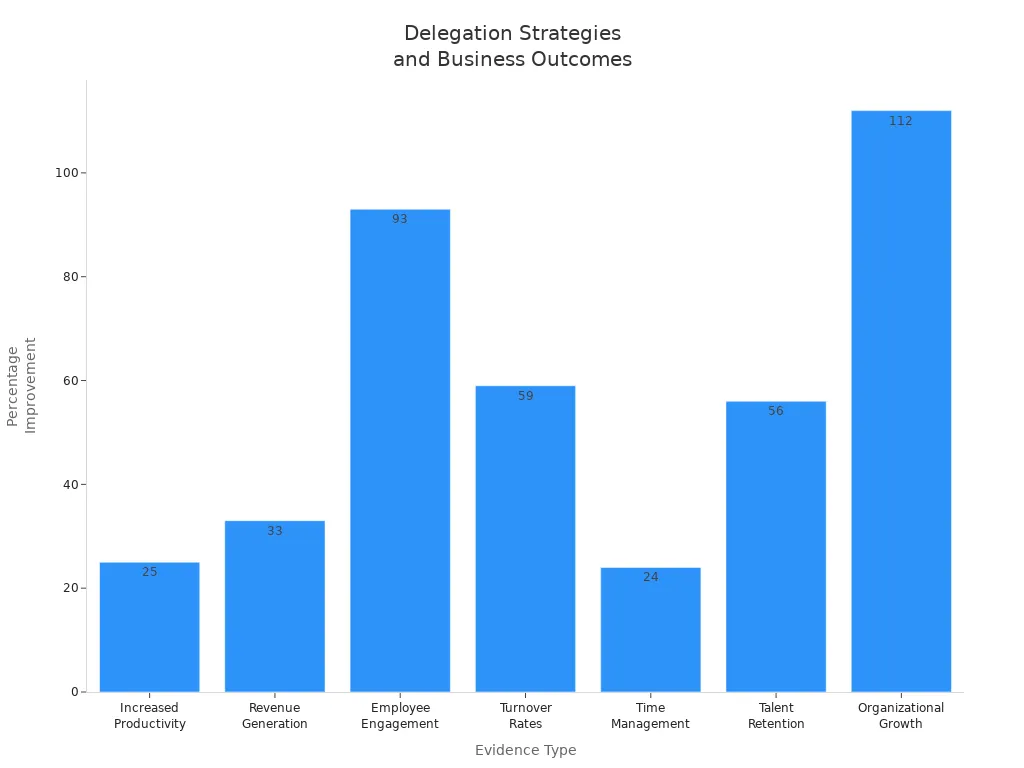
Delegation increases productivity and accountability. Managers assign tasks based on team members’ strengths. This strategy frees up time and helps employees develop new skills. Delegation also boosts motivation and engagement.
Evidence Type | Statistic/Fact |
|---|---|
Increased Productivity | Managers who delegate effectively can boost productivity by 20-30%. |
Revenue Generation | CEOs who excel in delegation generate 33% more revenue compared to those with low delegation skills. |
Employee Engagement | 93% of employees feel more motivated when involved in decision-making. |
Turnover Rates | Engaged employees experience 59% lower turnover rates. |
Time Management | 24% of a manager’s time could be freed up with effective delegation. |
Talent Retention | Companies prioritizing employee development through delegation see a 56% higher talent retention rate. |
Organizational Growth | Organizations practicing delegation are 112% more likely to experience high growth rates. |
Delegation creates a positive work environment.
Employees gain hands-on experience and improve their skills.
Responsibility increases motivation and accountability.
Empowered teams contribute creative solutions and drive innovation.
Systems and teams that prioritize delegation see higher growth and better talent retention. Clients at systems and teams have achieved strong business results by empowering their teams and sharing responsibilities.
Note: Delegation supports Business Optimization by allowing leaders to focus on strategy while teams handle daily tasks.
Use Simple Tools
Simple tools help businesses work smarter every day. Many companies choose digital tools that save time and reduce mistakes. These tools do not require advanced training. Most teams can start using them right away.
Small and medium businesses often see big improvements by picking the right software. The table below shows some of the most useful types:
Software Type | Description |
|---|---|
Accounting Software | Automates tasks like invoicing and expense tracking, reducing manual errors and saving time. |
Time Tracking Software | Helps in accurately tracking hours worked, essential for billing and productivity management. |
Project Management Tools | Facilitates managing projects, clients, and cash flow, ensuring smooth operations. |
Integrated Platforms | Combines CRM, project management, and invoicing in one system for streamlined operations. |
Accounting software handles invoices and expenses. This reduces paperwork and helps teams avoid errors. Time tracking software records hours worked. Managers use this data to improve schedules and boost productivity.
Project management tools organize tasks and deadlines. Teams see what needs to be done and who is responsible. This keeps projects on track and prevents confusion. Integrated platforms combine several tools in one place. These systems help teams manage customers, projects, and billing without switching between apps.
Tip: Start with one tool that solves your biggest problem. Add more tools as your team grows.
Simple tools support Business Optimization by making daily tasks easier. They help teams focus on important work instead of routine chores. Companies that use these tools often see faster results and better teamwork.
Boost Team Productivity

Encourage Collaboration
Teams that collaborate well achieve more. They share ideas, solve problems faster, and use resources wisely. Collaboration in self-managed teams helps balance tasks and optimize resources. It also builds trust and accountability. When teams trust each other, they become more creative and productive. Multi-functional groups benefit from open communication and shared knowledge. This leads to fresh solutions and better results. Matrix teams rely on strong collaboration for coordination. This improves agility and helps the business adapt quickly.
Collaboration in teams enhances resource optimization and task balancing.
It fosters a culture of mutual trust and accountability, leading to increased innovation and productivity.
Multi-functional teams benefit from diverse skills through open communication and shared knowledge, resulting in creative solutions.
Matrix teams require effective collaboration for coordination, which improves organizational agility and productivity.
Teams that work together solve problems faster and drive business growth.
Quick Training
Quick training methods help teams learn new skills without taking too much time. Short, focused sessions keep employees engaged and ready to apply what they learn. Many companies use creative training activities to boost productivity and teamwork.
Skills Developed | |
|---|---|
5-Minute Brainstorm | Ideation, communication |
Delegation Domino | Delegation, task prioritization |
Lightning-Fast Feedback | Communication, constructive feedback |
Calendar Tetris | Time management, task prioritization |
Priority Puzzle | Task prioritization |
Minute To Win It | Group coordination, quick reaction under pressure |
Quick Meditation Sessions | Concentration, mindfulness, stress management |
Online Meetings for Productivity | Knowledge-sharing, growth mindset |
Role-playing exercises give teams a chance to practice real-life scenarios. Story-based learning uses narratives to teach important lessons. Gamification adds game elements to training, making it more engaging and motivating.
Quick training keeps teams sharp and ready for new challenges.
Recognize Success
Recognition motivates employees to do their best. When people feel valued, they develop a sense of belonging. This creates a strong workplace community. Engaged employees work harder and show more loyalty to the company. Regular recognition increases investment in work and boosts motivation to reach company goals. Companies with strong appreciation cultures see lower turnover rates. In fact, organizations with effective recognition programs report a 31% reduction in employee turnover.
Employees who feel valued and appreciated develop a sense of belonging, which fosters a strong workplace community.
Engaged employees are more fulfilled and tend to work harder, leading to increased productivity.
Regular recognition leads to higher employee investment in their work.
Recognizing employees' efforts boosts their loyalty and motivation to achieve company goals.
Companies with strong employee appreciation cultures saw a 31% reduction in turnover compared to those with weaker recognition programs.
Simple recognition, like a thank you or a team shout-out, can make a big difference in team productivity.
Enhance Customer Experience
Listen to Feedback
Companies improve customer experience by listening carefully to feedback. They collect opinions after every interaction, using automated requests to avoid putting customers on the spot. Simple and direct questions encourage honest answers. Many organizations personalize feedback requests, which increases engagement and relevance. Customers appreciate the option to opt out of follow-up calls, as seen when Welsh Water reallocated 83% of resources by respecting customer preferences.
Businesses keep surveys short to prevent overwhelming customers. They track key performance indicators to measure how feedback improves their processes. Some companies use artificial intelligence to analyze and categorize large volumes of feedback, making it easier to spot trends. When leaders act on feedback, they show customers that their voices matter. This approach builds trust and helps companies refine their services.
Companies that tie employee bonuses to customer satisfaction create a culture focused on the customer’s needs.
Best practices for collecting and using feedback:
Automate feedback requests after each interaction.
Keep questions simple and concise.
Personalize requests for better engagement.
Allow customers to opt out of follow-up calls.
Track KPIs to measure feedback impact.
Act on feedback to improve business processes.
Simplify Interactions
Customers value easy and clear interactions. Businesses encourage feedback at every touchpoint, making customers feel heard. Proactive support across multiple channels meets different preferences, whether by phone, email, or chat. Feedback loops help companies gather opinions and act on them quickly.
Personalization makes customers feel valued. Many organizations use Customer Interaction Management software to record and manage every interaction. An omnichannel strategy ensures seamless experiences, so customers can switch between channels without confusion. Chatbots and artificial intelligence provide timely assistance, helping customers get answers fast.
Methods for simplifying interactions:
Listen actively at every touchpoint.
Offer support across multiple channels.
Use feedback loops for continuous improvement.
Personalize the experience for each customer.
Use Customer Interaction Management software.
Implement an omnichannel communication strategy.
Deploy chatbots and AI for quick support.
Leveraging technology streamlines communication and improves satisfaction.
Respond Fast
Speed matters in customer service. Most customers expect immediate responses when they have questions. Businesses that reply quickly build stronger relationships and increase retention rates. Prompt answers make customers feel valued and understood.
Evidence Type | Description |
|---|---|
Customer Expectations | Upwards of 90% of customers rate an 'immediate' response as important. |
Impact on Retention | Faster response times lead to higher customer retention rates. |
Relationship Building | Prompt responses help build stronger relationships with customers. |
Instant support reduces churn rates, as customers are less likely to leave when they receive timely help. Companies that meet expectations for quick solutions create loyal customers who return again and again.
Fast responses prevent frustration and loss to competitors.
Quick solutions strengthen connections and boost loyalty.
Businesses that prioritize rapid response set themselves apart and keep customers coming back.
Measure and Adjust

Track Metrics
Tracking the right metrics helps businesses see if their efforts lead to real improvements. Teams use different types of metrics to measure progress. Efficiency metrics show how well resources like time and money are used. Effectiveness metrics reveal if the company reaches its goals. Quality metrics track errors or defects in products or services. Compliance metrics make sure the business follows rules and policies.
Metric Type | Description |
|---|---|
Efficiency Metrics | Measure how resources like time, money, or manpower are used. |
Effectiveness Metrics | Evaluate whether the desired outcomes are achieved. |
Quality Metrics | Track the rate of errors, defects, or non-conformities. |
Compliance Metrics | Ensure processes follow regulations and internal policies. |
Other important measures include revenue growth, return on investment (ROI), customer satisfaction, and conversion rate. These numbers help leaders understand if their strategies work.
Revenue growth shows if the company is making more money.
ROI tells if the business gets good value from its efforts.
Customer satisfaction measures how well the company meets customer needs.
Conversion rate tracks how many people take a desired action, like making a purchase.
Tip: Simple metrics give clear signals about what works and what needs change.
Review Results
Regular reviews help teams stay on track. After making changes, teams monitor and measure processes to see if results improve. They document data and update records often. This helps everyone see what works and what does not.
Continuous monitoring ensures that improvements last.
Teams update data to check if changes bring better results.
Feedback loops let teams share ideas and spot problems early.
Open communication helps teams report issues quickly.
Teams also refine their approach as markets and customer needs change. Tracking key performance indicators (KPIs) helps spot new problems and areas for growth.
Make Adjustments
Making adjustments keeps the business moving forward. Teams collect data from many sources, such as market trends, social media, and customer feedback. They analyze this data to find patterns and trends. This helps them make smart decisions.
Method | Description |
|---|---|
Gather information from sources like market data and customer feedback. | |
Data Analysis | Look for patterns, trends, and unusual results. |
Actionable Insights | Turn findings into steps for better strategies. |
Pattern Recognition | Spot trends to predict what might happen next. |
Association Analysis | Find links between different data points to improve products or marketing. |
Predictive Analysis | Use past data to guess future events and plan ahead. |
Text Mining | Study online content to understand public opinion and brand image. |
Teams set clear goals and use the right tools to support their work. They build a culture where everyone uses data to make decisions. Training helps team members understand and use data well. Good data quality ensures that decisions are based on facts.
Regular adjustments help companies stay ahead and support ongoing Business Optimization.
Avoid Common Pitfalls
Overcomplicating Solutions
Many businesses try to solve problems by adding layers of complexity. They believe that more steps or advanced systems will guarantee better results. This approach often backfires. Over-optimization can block creativity and flexibility. Teams lose the ability to adapt quickly when every process has too many rules. A focus on speed sometimes leads to missed details, which can lower quality.
Over-optimization limits creative thinking and flexibility.
Rushing improvements can cause teams to overlook important details.
Simple solutions work best. Teams should choose clear steps and easy-to-use tools. When processes stay simple, employees understand their roles and complete tasks faster. Leaders who avoid unnecessary complexity help their teams stay focused and productive.
Tip: Simplicity encourages innovation and helps teams solve problems quickly.
Ignoring Team Input
Successful optimization depends on team involvement. When leaders ignore input from key stakeholders, problems arise. Employees who feel unheard may resist changes. This resistance slows down progress and can lead to poor results. Disengaged team members often lack motivation, which affects the quality of their work.
Stakeholders who feel excluded may resist new processes.
Disconnected employees show less enthusiasm and motivation.
Teams bring valuable insights from daily operations. Their feedback helps leaders spot issues early and find better solutions. Open communication builds trust and encourages everyone to work toward shared goals. Leaders who listen to their teams create a positive environment for change.
Note: Team input leads to stronger solutions and smoother implementation.
Skipping Follow-Up
Follow-up is essential for long-term success. Many companies make changes but forget to check results. Without follow-up, teams miss opportunities to improve and fix problems. Sales teams show this pattern clearly. Nearly half never follow up after the first contact. Only a small group makes three or more follow-ups. On average, five calls are needed to close a sale. Persistence increases the chance of securing a lead.
Statistic Description | Value |
|---|---|
Percentage of sales teams that never follow up after initial contact | 48% |
Percentage of salespeople who make three or more follow-ups | 12% |
Average number of follow-up calls needed to close a sale | 5 |
Likelihood of securing a lead with persistence | Higher |
Regular reviews and follow-ups help teams track progress and adjust strategies. Leaders who check results often find new ways to improve. Follow-up builds accountability and keeps everyone focused on goals.
Callout: Consistent follow-up ensures that improvements last and teams reach their targets.
Common Mistakes to Avoid
Businesses often make mistakes during optimization. These errors can slow progress and increase costs.
Misalignment between departments causes one team's changes to create problems for another.
Limited staff training leaves employees confused about new systems.
Unrealistic timelines and tight budgets lead to rushed work and poor testing.
When these mistakes go unchecked, productivity drops and costs rise. Teams spend more time on workarounds, which delays operations and wastes resources.
Teams that avoid these pitfalls achieve better results and maintain steady growth.
Business Optimization starts with simple steps like setting clear goals, prioritizing tasks, and using easy-to-adopt tools. Companies that test changes and focus on user experience often see dramatic improvements. For example, Bear Mattress boosted revenue by 16.21% after optimizing its cross-sell flow. ArchiveSocial increased click-through rates by over 100% with better homepage design.
Company | Action Taken | Result |
|---|---|---|
Bear Mattress | Optimized cross-sell flow | 16.21% boost in revenue |
ArchiveSocial | Enhanced homepage and CTA button visibility | 101.68% increase in click-through rate |
Walmart.ca | Mobile optimization and user experience redesign | Improved user retention and conversions |
AliveCor | A/B testing on call-to-action buttons | Revenue growth |
Evernote | User testing for feedback on user retention | Increased engagement and new user attraction |
Immediate action leads to lasting results. Readers can choose one or two strategies today and see positive changes. For more guidance on achieving business optimization with systems and teams, reach out to learn more.
FAQ
What is business optimization?
Business optimization means improving how a company works. Teams use better processes, tools, and strategies. The goal is to increase efficiency, reduce costs, and boost performance.
How can small businesses start optimizing?
Small businesses can start by setting clear goals. They should review current processes, use simple tools, and track key metrics. Small changes often lead to big results.
Which tools help with business optimization?
Popular tools include project management software, accounting programs, and time trackers. These tools help teams organize tasks, manage money, and measure progress.
Why is team input important for optimization?
Team input helps leaders find problems and create better solutions. Employees understand daily tasks best. Their feedback leads to smoother changes and higher success rates.
How often should companies review their processes?
Companies should review processes every few months. Regular reviews help teams spot issues early and make quick improvements.
What are common mistakes in business optimization?
Common mistakes include overcomplicating solutions, ignoring team feedback, and skipping follow-up. These errors slow progress and reduce results.
How does business optimization affect customers?
Business optimization improves service speed and quality. Customers get faster responses and better experiences. Satisfied customers often return and recommend the business.
Can business optimization increase profits?
Yes. Companies that optimize often see lower costs and higher productivity. These improvements can lead to increased profits over time.


